Google’s most powerful model now available for developers
Anthropic ports Claude from Nvidia to AMD processors in three days
But first:
Claude updates Fable and Mythos ahead of IPO
Anthropic released Fable 5.2 on Monday, with Mythos 5.2 going to select organizations through its existing verification program, days before a public listing expected as soon as this month. Fable 5.2 handles harder software engineering work, hardware tasks such as controlling robots, and long-running projects, and is designed to coordinate more than 1,000 AI agents at once. Mythos 5.2 is the same model with fewer safeguards for cybersecurity and life sciences work, and Anthropic is extending access to more US and non-US companies. Anthropic says both models are faster than earlier versions, and Fable now costs $8 per million input tokens and $40 per million output tokens, down from $10 and $50 for Fable 5.1. Anthropic says the US government and third-party evaluators reviewed the models before launch and that new sandbox-escape tests found both less likely to break out of testing environments than prior versions, though those test results were not published in the article. (Anthropic)
Muse Ember matches Claude Haiku 5.5 at lower cost per task
Artificial Analysis reports that Meta’s Muse Ember matches Claude Haiku 5.5 (max) at 36 on its Intelligence Index while costing $0.14 per task versus $0.41. Pricing is $0.10 per million input tokens, $0.004 cached input, and $0.50 output. Input and output match Claude Haiku 5.5 and GPT-6 Luna, but Artificial Analysis says cached input is 60% cheaper and Ember uses about a third as many output tokens. Agentic results are mixed: Ember beats Haiku on Terminal-Bench 4.0 (40.9% vs 32.8%) but trails on FrontierCode 2.0 (27.2% vs 34.9%). In Meta’s own Muse Code agent, the model scores 46 on the firm’s Coding Agent Index, against 37 for Haiku in Claude Code. Its AA-Omniscience accuracy is 21.1%, the lowest of comparable models, because it declines 64% of questions, which holds its hallucination rate to 17.4%, half of Haiku’s. For developers running high-volume agent workloads where cached input dominates the bill, Ember is a cheaper option on this benchmark data, though it is a weak fit for tasks that depend on factual recall. (Artificial Analysis)
Google teams solve a major cryptography problem
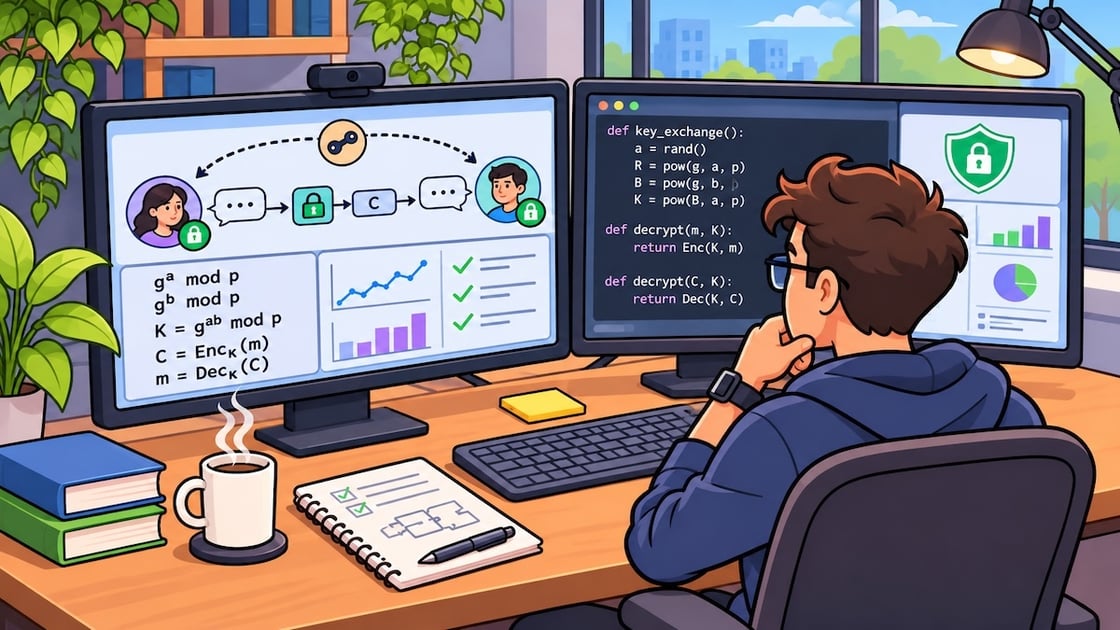
Google DeepMind researchers used an agentic AI framework called AlphaProof Code to formally verify several cryptographic guarantees of the Signal protocol, in a four-week proof-of-concept. Formal verification uses math to prove software behaves as specified. The work did not cover the entire Signal mobile app, and it found no new vulnerabilities in the portions examined. Run against older Signal versions with known, long-fixed flaws, the tool correctly flagged them and showed the protocol could not be verified. DeepMind is releasing its specification and proof for the Signal analysis, but Google declined to share the project’s cost or say whether a commercial product is planned, so whether AI-assisted verification can scale affordably to larger codebases is still open. (Google)
AI code still requires human cleanup
Researchers from Alibaba and several Asian universities released Co-Design Bench, a coding-agent benchmark built from real user change requests to existing web apps, some supplied as images, audio, video, or documents. In tests of ten models, the top performer, GPT-6 Astra, met about 70 percent of each task’s requirements on average but produced a fully correct result on only 26.4 percent of tasks. Scores fell for every model as a task combined more change types such as layout, design, interaction, and content, and extra compute did not help: GLM-5.2 used nearly six times as many tokens as GPT-6 Astra on smaller changes and scored significantly worse. The same model also scored differently across harnesses (the programs through which an agent reads, writes, and executes code); Qwen3.8-27B got 75 percent in one environment and 56 percent in another on larger overhauls. For developers choosing a coding agent, this means a leaderboard score for the model alone is incomplete, and the model should be tested together with the harness it will run in. (The Decoder)
Gemini 4 Carbon now widely available
Google DeepMind made Gemini 4 Carbon generally available through the Gemini API in Google AI Studio and Gemini for business, after a two-week preview for security defenders in its Fairwind Program. Pricing matches Gemini 4 Argon at $2 per million input tokens and $10 per million output tokens, and Google AI Ultra subscribers get it in Google Antigravity, the Gemini app, and AI Mode in Search. Google says Carbon ranks first on CursorBench 4.0, Perplexity’s WANDR, and Zapier’s AutomationBench at more than twice as low a cost per task as the next best external model, and second on a new Multimodal Knowledge Agent benchmark built with Artificial Analysis. Carbon uses more tokens than Argon to reason and verify, so Google recommends Argon for most software engineering and knowledge work and Carbon for multi-step debugging and open-ended research. Google also previewed /swarm in Antigravity, which turns one prompt into a team of agents, with Carbon assigned to architecture, coordination, and auditing and lighter models handling parallel work. Because Carbon costs the same per token as Argon but spends more of them, developers will need to compare cost per task on their own workloads before routing hard problems to it. (Google)
Anthropic engineers may have solved the CUDA problem
Anthropic says it ported Claude to AMD GPUs in three days with almost no human intervention, a job that normally takes dozens of engineers six to twelve months. According to co-founder and Chief Compute Officer Tom Brown, its own frontier model, Mythos, wrote or ported nearly 100 percent of the kernels (the low-level GPU routines that CUDA-style software ecosystems provide). Anthropic now trains and runs Claude on all four major chip families and treats compute across vendors and locations as one interchangeable pool. The figures come from an investor presentation and have not been independently verified. If they hold, the cost of leaving CUDA falls from a months-long engineering project to a few days of model-assisted work, which would make switching chip vendors a routine purchasing decision. (The Decoder)
Meme of the week
Want to know more about what matters in AI right now?
Readthe latest issueof The Batch for in-depth analysis of news and research.
Last week, Andrew talked about the growing demand for AI engineers, the creation of new jobs due to AI, and the benefits of embedding AI-savvy engineers in various business functions to enhance productivity and innovation.
“Looking across many businesses, the opportunities for AI engineers to make a difference seem endless. I write this from Silicon Valley, where people who are skilled in AI engineering are in great demand. As AI adoption spreads, I expect global demand for people with AI engineering skills to keep growing.”
Build your AI engineering skills in person at AI Dev NYC. OpenAI’s Salil Sethi and Hugging Face’s Joel Niklaus will deep dive into building and deploying AI applications, alongside other speakers from Neo4j, Oracle, Sonar, and more.